
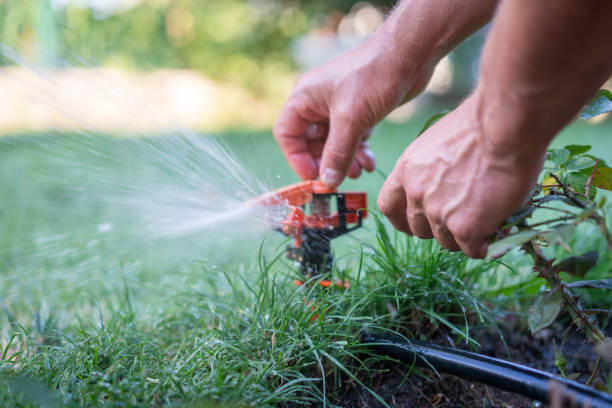
Your sprinkler system talks, you just have to know the signs. A sprinkler system can look simple from the outside. Water comes on. Grass gets wet. Done, right? Not quite. Under the ground, there are pipes, valves, heads, wires, timers, and zones all working together. When one part is off, the whole yard can suffer.
The good news is that most irrigation problems leave clues. You do not have to be an expert to see them. If you know what to look for, you can spot trouble early before it turns into dead grass, wasted water, plant stress, or a big repair.
Here are nine simple signs your sprinkler system may need help
1. Dry spots that keep coming back
A dry spot is one of the easiest signs to see. If one area stays brown while the rest of the lawn is green, the water may not be reaching that spot. The cause could be a clogged head, a broken nozzle, low pressure, poor head spacing, or a bad spray pattern.
Do not just run the sprinklers longer. That can overwater the healthy areas and still miss the dry patch. The better move is to watch the zone while it runs. Look at where the spray lands and where it does not.
2. Puddles or soggy spots
Too much water is just as bad as not enough water. Puddles can mean a broken line, a leaking valve, a tilted head, poor drainage, or soil that does not soak water well.
A soggy area near a sidewalk or driveway can also mean water is spraying onto hard surfaces instead of the lawn or plants. That wastes water and can make the yard look rough.
3. Sprinkler heads that spray the wrong way
Sprinkler heads get bumped. Mowers hit them. Soil shifts. Roots push on them. Over time, heads can spray the street, fence, house, sidewalk, or neighbor & yard instead of the landscape.
This problem is common and usually easy to spot. Turn on each zone and walk it. If water is hitting concrete more than plants, that zone needs adjustment.
4. Low water pressure
Low pressure can make sprinkler heads bubble, spit, or barely pop up. It can also make the spray fall short. The result is uneven watering. Low pressure can come from a leak, clogged filter, valve issue, pressure problem, or too many heads on one zone. This is one of those issues where a trained irrigation tech can save a lot of guessing.
5. High water pressure
High pressure can look like mist. Instead of heavy droplets landing on the soil, the sprinkler makes a fine fog. That fog can drift away in the wind and never reach the roots. If you see misting, the system may need pressure regulation, different nozzles, or zone changes. Fixing this can help the landscape get more useful water without simply watering longer.
6. Water running after the zone shuts off
A little drain-down can happen in some systems. But if water keeps running for a long time after the zone is off, there may be a valve problem or low-head drainage issue.
This can cause muddy areas, algae on hardscape, or weak spots in turf. It can also hide a slow leak that adds up over time.
7. Plants that look stressed even when watering happens
Sometimes the timer runs, but the plants still look sad. Leaves may wilt, turn yellow, brown at the edges, or drop too soon. This can happen when the wrong type of irrigation is used for the plant area.
Shrubs and trees often need deeper watering than turf. Flower beds may need drip. Slopes may need shorter watering times with soak breaks. A one-size-fits-all schedule does not work well for a mixed landscape.
8. The timer has not changed with the season
A summer watering schedule should not be the same as a winter schedule. Weather changes. Plant needs change. Soil moisture changes. If your controller has not been adjusted in months, the yard may be getting too much or too little water.
Smart controllers can help, but they still need correct setup. The controller only works well if the zones, plant types, and run times make sense.
9. Water is moving toward the house or building
This is the sign you do not ignore. Water should move away from buildings, not toward them. If irrigation or rainwater collects near foundations, doors, walkways, or low areas, drainage needs to be reviewed.
Good water management includes sprinkler layout, drip irrigation, grading, drains, catch basins, downspout connections, and smart repair work. That is why irrigation and drainage should be planned together.
What to do next?
Run each zone for a few minutes. Take notes. Look for dry areas, overspray, broken heads, leaks, puddles, and weak pressure. Take pictures if something looks wrong. Then decide if it is a simple adjustment or a deeper system problem.
The big lesson is simple: water problems rarely fix themselves. Small irrigation issues can grow into dead plants, higher bills, and damaged hardscape. Catch them early and the yard has a much better chance.